Falcra

The AI-Driven Development Lifecycle

Enterprise-grade software, built in days, not months.

The AI-Driven Development Lifecycle changes how software gets built: AI drives every stage, from requirements to tested code, while your people direct it and make every decision. Falcra is an Australian-based consultancy working with organisations internationally. We start with a day of training, then build a real application with your team, so they can keep building this way. We also help organisations find where AI pays off, with AI strategy and consulting in data, analytics and business analysis.

Who we are

AI-driven, not AI-assisted

Most organisations now use AI as a coding assistant inside their usual delivery process. The process stays the same, and so does the timeline.

In AI-driven development, AI carries the work through every stage, from requirements to tested software. Your people direct it and make every decision. That is what makes the speed possible.

Falcra exists to bring that way of working into your organisation, safely, and to leave the capability with your team.

The Instant Framework

The method behind the work

The Instant Framework is Falcra's step-by-step playbook for building enterprise software with AI. It sets out who needs to be in the room, what happens at each stage, and how the business checks and signs off the result. We publish it free, and every Falcra engagement follows it.

In short: AI does the building, and the playbook keeps your organisation in charge of what gets built, whether it can be trusted, and when it goes live.

  • The whole lifecycle

    Prepare, Frame, Specify and Design, Build, Prove and Release, ending in a result the business signs.

  • A guess is never a fact

    Every claim is sourced. Anything not yet verified is reported as unverified.

  • Enterprise decisions built in

    Data audit levels and a security constraints package are settled up front, not discovered at go-live.

  • Free tools

    A run sheet for every step, a ready-to-import Jira backlog, Information and Data Model templates, a pull request template and a risk tier register.

The framework is defined independently of any one tool and currently runs on AWS's open-source AI-Driven Development Lifecycle. Once your application is built, it has no dependency on it or on AWS. It was created by Falcra's founder, Drew Salem.

Explore the Instant Framework

Approach

How an engagement works

A day of training, then the build.

  1. 01

    A day of training

    We start with a day of training on a sample project: a couple of hours for your business people, half a day for the people who will lead your future builds.

  2. 02

    Then the build

    A real application of yours, built in a few days in one room with your people, from requirements to tested software. The people who will lead your future builds work alongside ours throughout.

  3. 03

    A short review

    We review the build with you: what worked, what to change, and whether your team is ready to lead the next one.

Every Falcra engagement starts with a day of training on a sample project: a couple of hours for your business people, and half a day for the people who will lead your future builds. Then comes the build. Your own people work alongside us on your real application, learning each step as it happens, and by the end they run those steps themselves. A short review closes the engagement. When we leave, you have working software, the free Instant run sheet and templates, and a team that can keep building this way.

What you end up with: the application, and the capability to build the next one.

Case study

Replacing a licensed compliance system

An organisation built its own system instead of licensing one.

$450k+
in annual licence fees avoided
About 4 days
to build, on the team's first attempt
In production
replacing the licensed product

The situation

After a tender, the closest off-the-shelf product cost nearly half a million dollars a year and met only about 60% of the organisation's requirements.

The approach

The organisation built its own application with the AI-Driven Development Lifecycle, using a few days of one specialist's time, a laptop, and its own subject-matter experts.

The outcome

The application now does the job the licensed product was bought to do, and the organisation owns it outright.

  • More than $450,000 saved every year. No licence fees, and no renewal price rises to negotiate.
  • Built to its own requirements. Not the 60% an off-the-shelf product could offer, and no workarounds to cover the gap.
  • Enhancements on its own timeline. A change is made and rolled out when the business needs it, not raised as a request and left waiting for a provider to maybe add it to their roadmap.
  • No vendor lock-in. The organisation owns the code and its data, and decides how the system connects to everything else it runs.
  • No per-user licensing. The system can be rolled out to as many people as need it, at no extra licence cost.
  • Knowledge stays in-house. The organisation's own experts shaped the system, understand it, and can keep improving it.
Services

AI strategy and consulting

Not every organisation is ready to build yet. Many first want to know where AI can make a real difference to their business, whether their data can support it, and what to do first.

We help you find where AI pays off, prove it on your own data, and then build it. Our consulting draws on more than 25 years of hands-on work in business analysis, data, integration and analytics.

Finding where AI pays off: a four-week engagement

  1. Week 1

    Discover

    Confirm goals and scope with your sponsor, map who makes which decisions, and understand how they are made today, and the data and systems behind them.

  2. Week 2

    Workshops

    One workshop per business area. We start from the decisions people make, then ask where AI could help: predicting what will happen, recommending what to do, automating routine steps, or explaining why something happened.

  3. Week 3

    Assess

    What each idea could be worth in revenue, margin, cost or risk, whether your data and systems can support it, and the risks to manage: privacy, fairness and accountability.

  4. Week 4

    Prioritise and plan

    A ranked shortlist, a 6 to 12 month AI roadmap, and a recommended proof-of-value ready to approve and start.

What to do first

Every idea is scored on two questions: how much would it be worth, and how easy is it to do with the data and systems you have today? Ideas worth a lot and doable now become quick wins. Those worth a lot but needing groundwork, such as cleaner data, go later in the roadmap, with the groundwork scheduled first.

Readiness, use case by use case

For each priority we check the data (do you hold it, is it accurate, does it go back far enough), the platforms, the people and skills, how the decision is made today, and governance, following the Australian Government's Guidance for AI Adoption.

A roadmap with decision points

Each use case moves through the same stages: idea, proof-of-value, pilot, then full use. At the end of each stage, the business decides on the evidence whether to continue, change course or stop.

Proof-of-value, not proof of concept

A proof of concept asks "can it be built?". A proof-of-value asks "is it worth it?": a short, time-boxed test of one use case on your real data, measured against how you do it today, with success criteria agreed up front.

Where AI can help commercial teams

Common examples, in plain terms. The workshops decide which matter to you.

Sales

Sales forecasting from history, pipeline and seasonality. Account and deal prioritisation, ranking customers and deals by how likely they are to buy and what they're worth. Next best action: what to offer each customer next, based on what similar customers bought.

Customer

Segmentation by how customers actually buy. Churn risk, flagging customers likely to buy less or leave, early enough to act. Customer lifetime value: what a customer is worth over the whole relationship.

Demand planning

Machine learning forecasts by product and location from many factors at once, such as season, price, promotions and weather. Demand sensing, adjusting short-term forecasts from the latest signals. Forecast accuracy tracking, so planners know which numbers to trust.

Pricing

Price elasticity modelling measures how much sales rise or fall when a price changes, product by product, showing where a price rise will cost volume and where it won't. Price optimisation recommends prices that meet a goal such as margin or volume.

Promotions

Promotion evaluation works out what a promotion really added, against what it cost, separating genuine extra sales from sales taken from your own products or pulled forward from later weeks. Promotion planning forecasts a promotion's likely result before you commit.

Ask your data in plain English

Generative AI assistants answer questions such as "why were sales down in Queensland last month?" from your own data, without waiting for a report, and show why they recommend something so people can check it.

Consulting services

Short engagements, on site or remote, that can grow into longer ones.

AI strategy and adoption

Where AI fits, use-case discovery and scoring, readiness assessments, roadmaps, proofs of value and AI governance.

Technical business analysis

Discovery workshops, requirements and traceability, current and future-state process models, business rules and decision models, and user acceptance testing.

Data and integration

Integration design, APIs and middleware, data warehousing, master data, and data governance and quality.

Data migration

Strategy, mapping, options assessment and delivery, including large file and attachment migrations.

Reporting and analytics

Dashboards and AI-enabled insights from your operational data.

Solution and vendor evaluation

Options assessments, target-state architecture and business cases.

Security and compliance uplift

Data sovereignty, moving cloud hosting to Australia, and payment card and defence security programmes.

Development

SQL, .NET, JavaScript and React, mobile apps, AI agents and applications built on large language models.

Working examples

Built with AI, in days

Working applications built with AI-driven development.

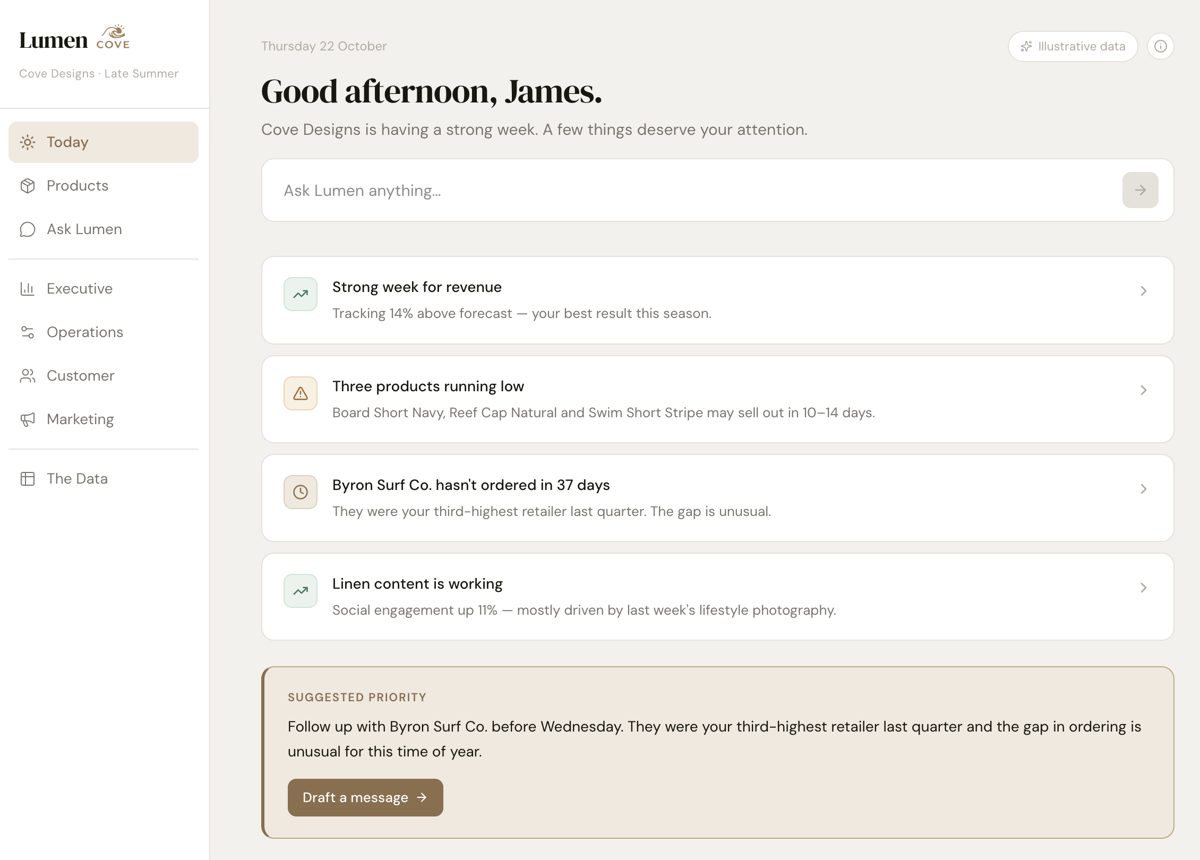
  • Lumen dashboard showing plain-language business insights

    Lumen

    AI-enabled business intelligence: plain-language insights from marketing, operations and customer data. Built in five days.

    See Lumen

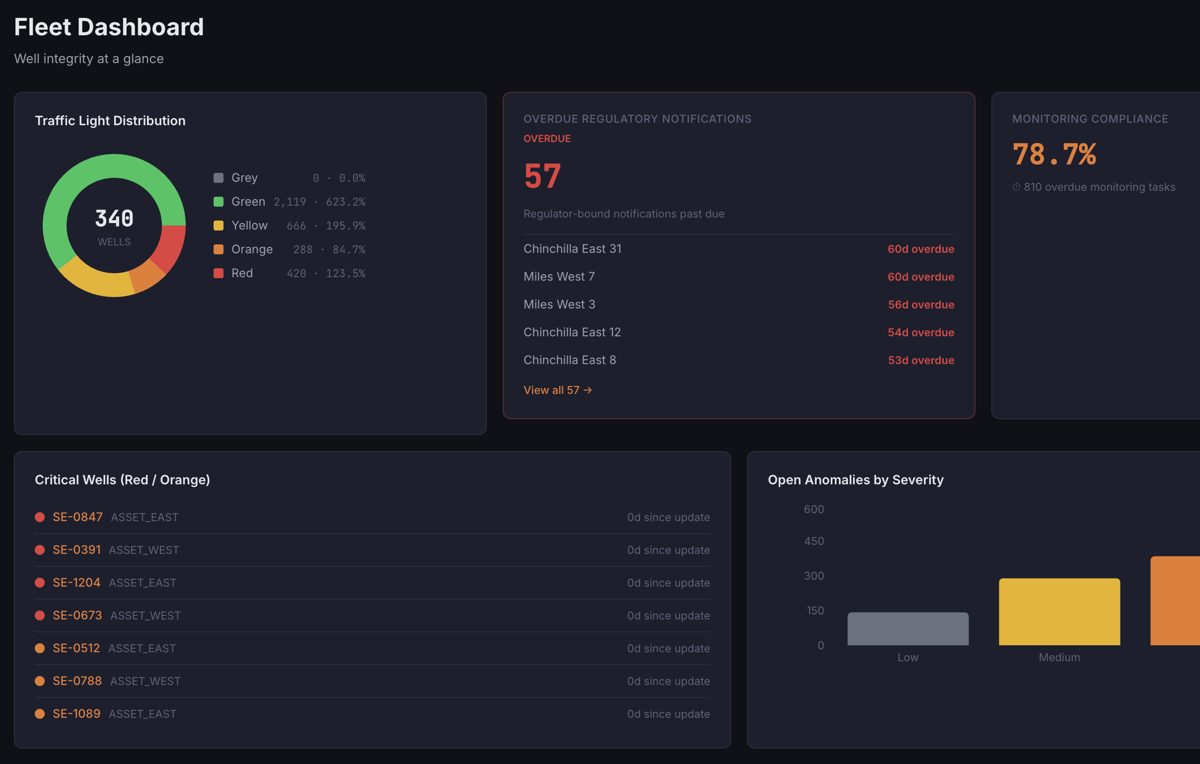
  • Asset integrity dashboard with risk status and open anomalies

    Asset integrity system

    An independent build of a system like the one in our case study: risk classification, assessments, failure and action management, and an audit trail.

    See the system

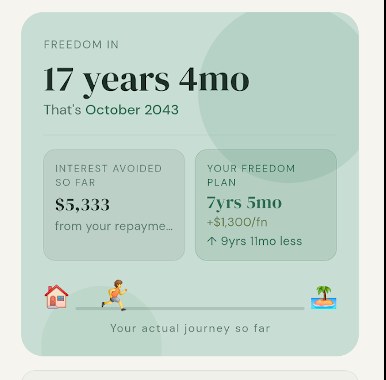
  • Mortgage Freedom Tracker app screen

    Mortgage Freedom Tracker

    A commercial mobile app taken from concept to store release in about two weeks. Search Google Play for Mortgage Freedom Tracker.

Governance

Lower risk than going it alone

You see it work on a real application of yours, with your own people in the room, before you decide to adopt it. It isn't a course, or a tool you have to prove out on your own.

Business-led

Your experts decide and sign, not developers alone.

Evidence instead of a waiver

Your business owner and technical owner sign an evidence pack before go-live.

Your rules win

Your security, privacy and data-handling policies apply. Where they are stricter than ours, we follow yours. Your database migration tool and release pipeline stay in control: permanent database changes go through them, reviewed by your DBAs.

Risk settled up front

Security, data and risk requirements are agreed with you at the start, not discovered at go-live. Every requirement, decision and approval is recorded, so you can see who decided what, when and why.

Code your developers can maintain

AI-written code has a reputation for being messy and hard to maintain, and independent studies back that up. Instant addresses it: small, documented blocks with limits checked automatically, every change tied to its reason, and before go-live a developer who wasn't in the room must be able to explain a sample of the code from the code and its comments alone.

Built on our own framework

Falcra developed the Instant Framework: a complete way of working for AI-driven software delivery, built to take the place of Agile when AI does the building. It streamlines the AI-DLC process and puts the safeguards an enterprise needs around it. theinstantframework.com

Contact

Start a conversation

Tell us about the software your organisation relies on, and what it costs you. We'll come back to you to arrange a time to talk.

We use your details only to reply to you.